SaaS & product
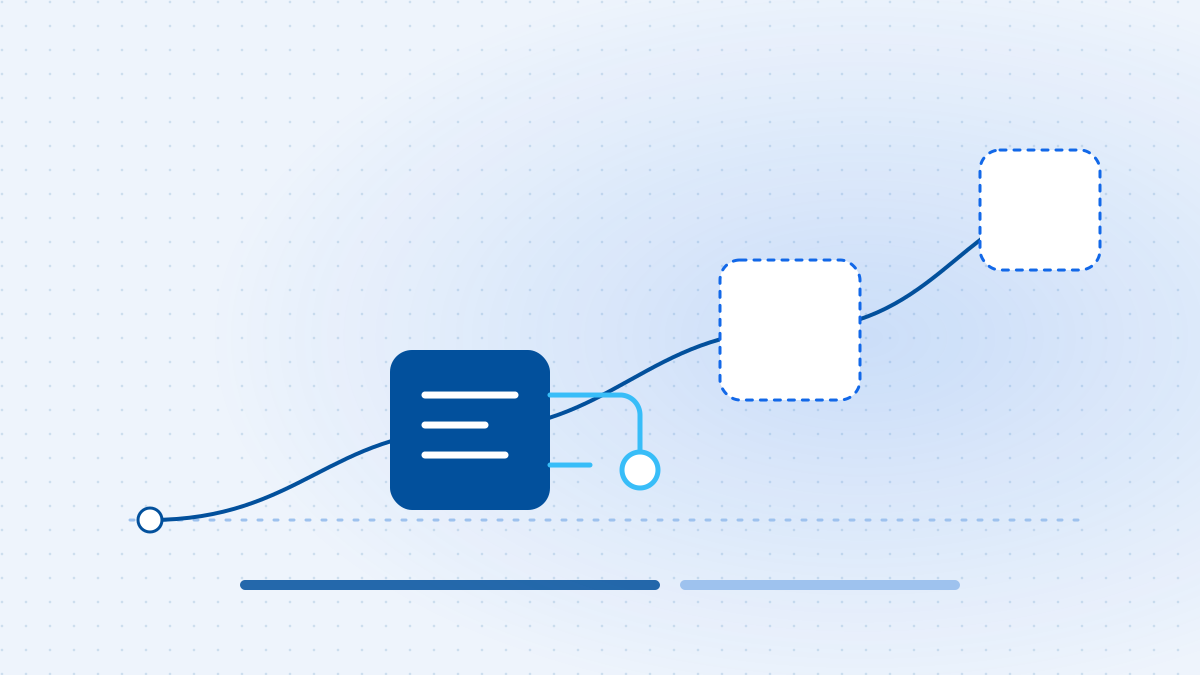
Planning a SaaS MVP: scope, integrations and the first usable release
How to decide what goes into a first release, which integrations it really needs, and what “usable” should mean for early customers.
Custom software & product engineering
We build new SaaS products and business platforms, and connect, improve or modernize the systems you already run. Where it genuinely helps, we add workflow automation and practical AI features.
What we do
Our core work is custom business software and SaaS products, supported by the integration, automation and operations work that keeps them useful.
Internal tools, portals and business platforms built around how your teams actually operate, instead of forcing work into spreadsheets and generic tools.
Typical work: Internal tools · Customer & partner portals · ERP-related workflows
Discuss a project: Custom business softwareFrom a scoped first release to a product customers rely on: discovery, architecture, product interfaces, backend systems, testing and launch, then continued evolution.
Typical work: Zero-to-one builds · Product UI & backend · Ongoing product evolution
Discuss a project: SaaS product engineeringConnect ERP, CRM, accounting, commerce and payment providers, with reliable data sync and migration. We integrate with payment providers; we don’t process payments.
Remove repetitive steps and add AI where it measurably helps, with people approving consequential actions.
Our approach to AIRefactor, migrate and maintain existing systems, and run their cloud infrastructure and delivery pipelines.
Release processes, backup and recovery planning, and business or application email set-up on your own accounts. Engineering work, not a hosting or mailbox plan.
Experienced engineers who join your team and work inside your tools, process and priorities.
Applied AI
Useful AI sits inside an existing workflow, uses the data and permissions you already have, and is judged on whether it helps. We start with one well-defined use case, connect the systems it needs, agree how its output is checked, and expand only on evidence.
Uncertain or rejected output goes back for correction, never straight to action.
Illustrative use cases
Examples of what can be built, not past Devpier projects.
Market context
Recent industry research suggests returns concentrate among companies that build AI into how they operate, rather than running isolated pilots.
74%
of AI-driven returns went to the leading 20% of the 1,217 companies surveyed.
PwC, “Want ROI from AI? Go for growth” (opens in a new tab) 13 April 2026
7.2×
higher AI-driven revenue and efficiency gains for the most “AI-fit” companies than for the rest of that sample.
PwC, same study (opens in a new tab) 13 April 2026
7%
of organizations in a survey of 1,000 executives report scaling AI across the enterprise.
McKinsey, “Putting AI to work” (opens in a new tab) 19 June 2026
Figures come from two separate surveys of different company populations. They describe those samples, not every business, and are not Devpier results or a forecast for any client.
How we work
We map users, workflows, existing systems and constraints, then agree a scoped first release worth building.
We design the interfaces and architecture, then build in reviewable increments with testing as part of the work.
We connect the software to the systems around it, migrate data where needed, and handle deployment and handover.
The same team can monitor, maintain and extend the software as your business and users change.
A scoped first release you can review, then further releases based on what you learn. Timelines are agreed once scope is clear.
Coding assistants help with drafting, code search and repetitive checks. Engineers own architecture, review, testing and release decisions.
Who we are
Devpier LLC is a Texas-based company that builds, connects and improves business software, supported by its own engineering team. We work alongside your people, take ownership of the technical work, and stay with the software after launch. Our engineers’ experience spans e-commerce, education, internal operations and payment workflows.
Ways to work with us: New product build · Existing system improvement · Ongoing engineering or team extension
We work in the open with your team: shared priorities, regular reviews of working software, and decisions explained in plain language.
We take responsibility for architecture, code quality, testing and deployment, and leave documentation your team can use.
The engineers who build a system can maintain and extend it, so knowledge isn’t lost at handover.
FAQs
Anything else is easiest to answer on a short call.
Yes. We begin by clarifying users, workflows and priorities, then shape a first release that is realistic to build. You do not need a full specification.
Yes. Much of our work extends, integrates or modernizes software already in use. We review the current code and infrastructure before recommending changes.
Yes, when the use case is clear and measurable. See the Applied AI section above for how we scope, review and evaluate it.
Yes. We maintain and improve applications after launch, including deployments, cloud operations, backups and recovery planning. Support arrangements are agreed per engagement.
It is a 30-minute Zoom call about the problem you want to solve, your current systems and any constraints. If there is a fit, we suggest next steps, such as a scoping session or a written proposal.
Yes. Alongside full project delivery, we provide engineers who work within your tools, processes and priorities.
Insights
SaaS & product
How to decide what goes into a first release, which integrations it really needs, and what “usable” should mean for early customers.
Applied AI
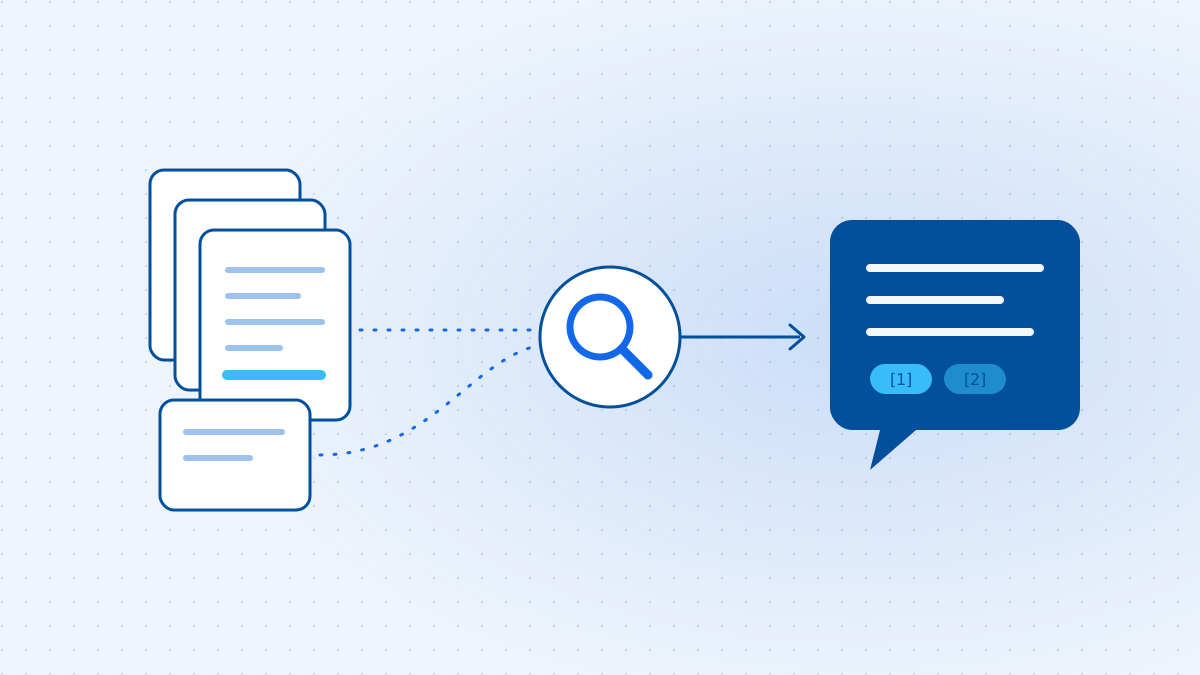
Retrieval-augmented generation lets an assistant answer from your own documents. Here is how it works, where it helps, and what it cannot promise.
Applied AI
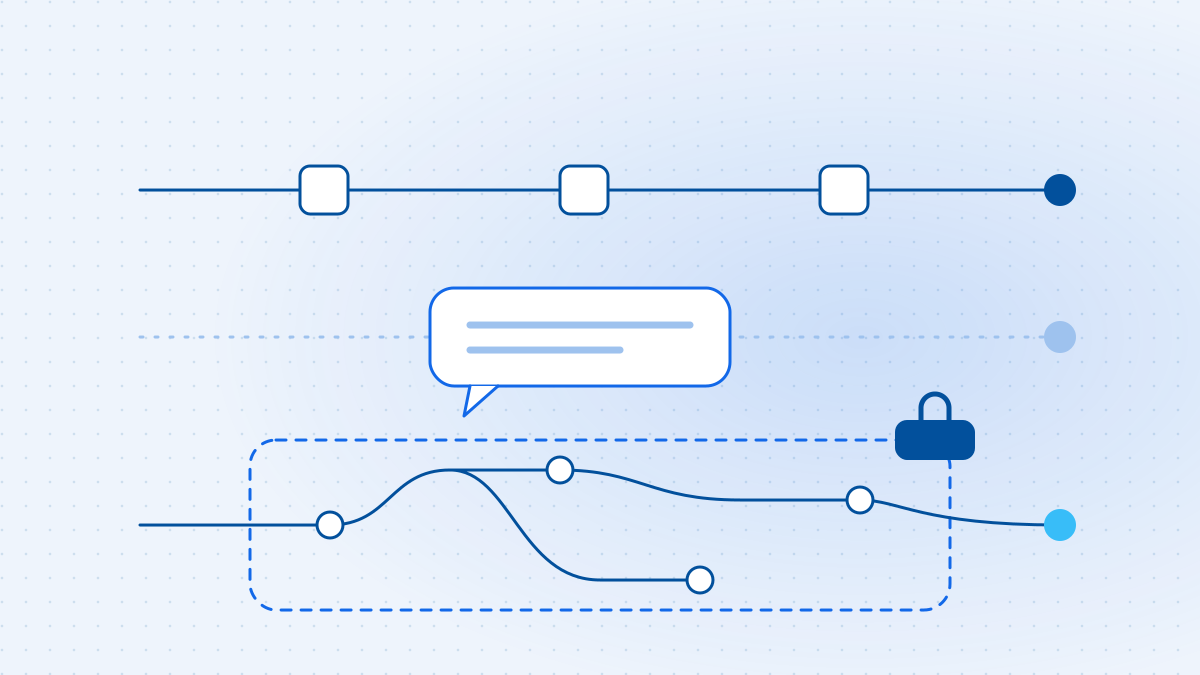
The labels overlap. What matters is who decides the next step, and what the software is allowed to change.
Contact
Book a 30-minute discovery call, or send a short brief about the product or operational problem you want to solve.
Pick a time in Calendly. Available times appear in your own timezone, and Calendly confirms the booking and meeting details.
Choose a time (opens scheduling)Scheduler not opening? Open the scheduling page (opens in a new tab)
Prefer email? waqas@devpier.net
Fill this in and we’ll open your email app with a ready-made draft to waqas@devpier.net. Nothing is sent until you send it from your email.